This page has been idle for a while. To make sure you don't miss out on the latest content, please reload the page.Refresh
Refresh
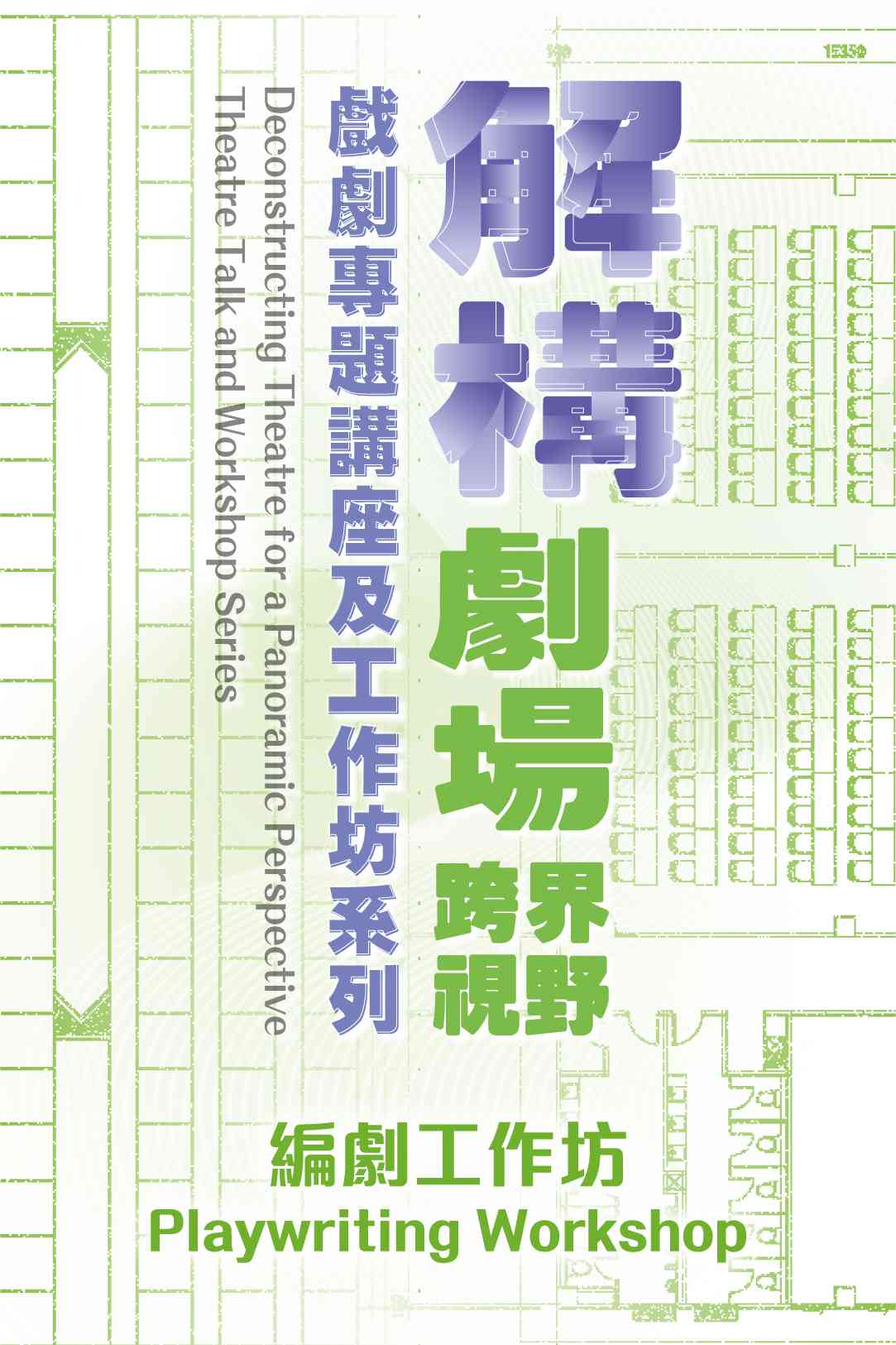
From scriptwriting, dramaturgy to scenography — discover the core of creating for the theatre from diverse entry points.
What draws us into a piece of theatre as it evolves from an idea into a stage play? Is it the dramatic tension in the script, the unfolding of visual metaphors, or the details in the various segments that slowly take shape?
There may be more than one answer to this: it has to be determined by the interaction between the links, and each plays a significant part.
This series charts a creative journey through three key theatrical disciplines — playwriting, dramaturgy, and scenography.
By exploring the genesis of a story, the construction of narrative logic, the imaginative potential of spatial and visual elements on stage, and the insights of local theatre creators, we invite you to step into multiple entry points of theatre-making and find more creative possibilities with us.
Playwriting Workshop
Speaker: Ivan Kwok
Workshop Overview
Playwriting Workshop: For Those Who Know How to Tell Stories
We all know how to tell stories — but do we know how to let stories "speak for themselves"?
While fiction, prose, and drama may seem to share common roots, their structures and narrative logic differ vastly. Fiction can stand back and observe; prose externalises sentiments; but drama demands the characters to speak for themselves.
This playwriting workshop invites participants to begin with conversations in everyday life, dreams, and the subconscious, then proceed to taking a new look at dialogues and dramatic thinking. Rather than abstract theory, it emphasizes practical exercises, short adaptations, and improvisation to explore how characters speak and how emotions and actions resonate.
In these five sessions, you'll rediscover the dynamics of dialogue, understand yourself more, listen to your characters, and take pleasure in every line you write.
Session 1 – 25.2.2026 (Wed): Where Stories Begin — The Instinct to Tell
Theme: The first step from everyday life to drama
Content:
- "We tell stories every day": a narrative exercise to draw on dreams, conversations, and memories
- Prose vs drama: Who's speaking? Who's listening?
- Exercise: turn a "slice of daily conversation" into an opening scene of a play
Session 2 – 4.3.2026 (Wed): Let the Characters Speak — The Birth of Dialogue
Theme: From "what I want to say" to "what the characters say"
Content:
- The three layers of dialogue: subconscious, rational, emotional
- The art of listening: how to turn a character's words into the pulse of a play
- Exercise: adapt a prose passage into a dialogue between two persons
Session 3 – 11.3.2026 (Wed): The Structure of Drama — From Emotion to Conflict
Theme: Why is it harder to write drama than prose?
Content:
- The dramatic triangle: desire, obstacle, transformation
- Character's action logic vs author's emotional impulse
- Exercise: devise what a character "wants" and what they "can't have"
Session 4 – 18.3.2026 (Wed): Scenes and Rhythm — The Breathing Theatre
Theme: From script to stage
Content:
- “A story you can see”: imagining stage space and physical action
- Rhythm and silent moments: how silence and action are more powerful than the spoken word
- Exercise: rewrite a "phone conversation" into a dramatic scene
Session 5 – 25.3.2026 (Wed): Draw from Life, Write the Play Within You
Theme: Drama as a way of understanding the self
Content:
- Transforming personal experiences into dramatic archetypes
- How to "find yourself and go beyond yourself" in a story
- Group sharing: one-page script reading presentations





































![Kai Tak Stadium | [25+ Emperor Entertainment Group All-Star Concert] Total investment exceeding 100 million RMB; Top stars and award-winning actors perform; A phenomenal show at Kai Tak Main Stadium; A golden team crafts a stage with intricate mechanisms](https://img.etnet.com.hk/customcover/event/2026/02/25/Emperorgpcon-2026-1_m.jpg)













![Kai Tak Stadium | Mayday [Back to That Day] 25th Anniversary World Tour Hong Kong Spring Blossom Edition](https://img.etnet.com.hk/customcover/event/2026/02/04/Maydayhkcon2026-1_m.jpg)